
-
Rechargeable laser level | BeamPro
Regular price From $49.90 USDRegular price -
Pocket laser level | PocketBeam
Regular price From $49.90 USDRegular price -
Mini laser level | GoBeam
Regular price From $49.90 USDRegular price -
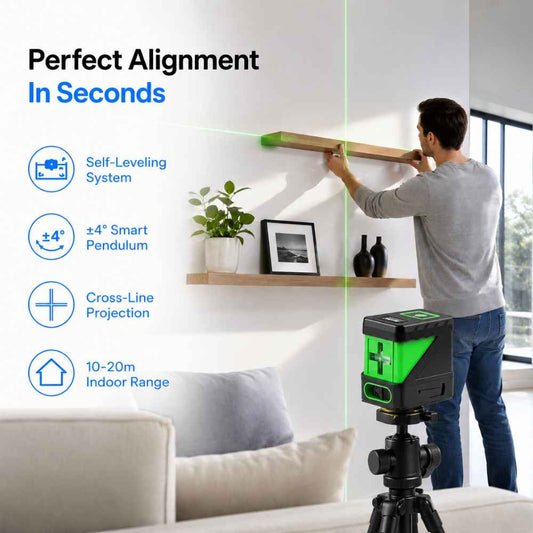
Magnetic laser level | Cross-Line
Regular price $59.90 USDRegular price$69.90 USDSale price $59.90 USDSale -
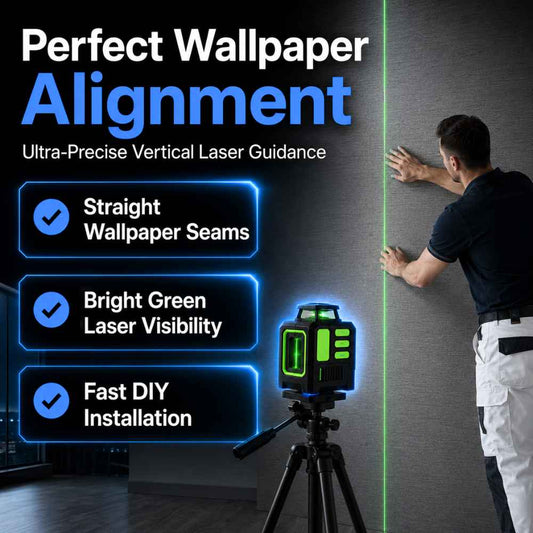
Laser level for wallpapering | WallBeam
Regular price From $69.90 USDRegular price -
Laser level for home projects | BeamLynk
Regular price $49.90 USDRegular price -
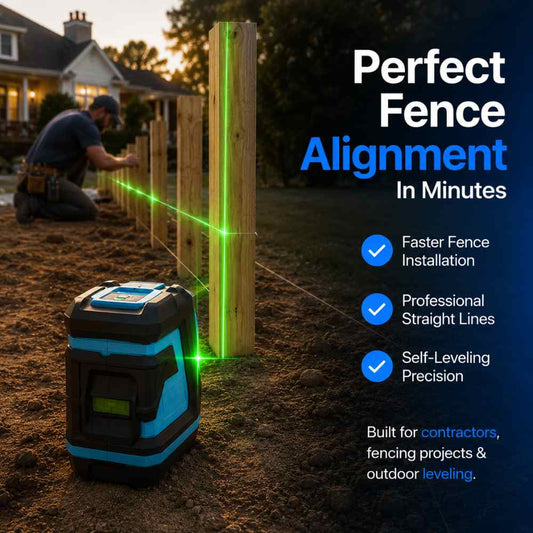
Laser level fence posts | PostAlign™
Regular price From $49.90 USDRegular price -
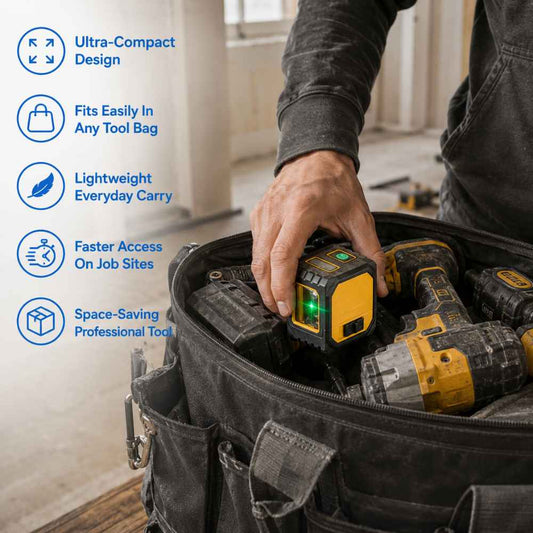
Laser level compact | CompactBeam Pro
Regular price From $49.90 USDRegular price

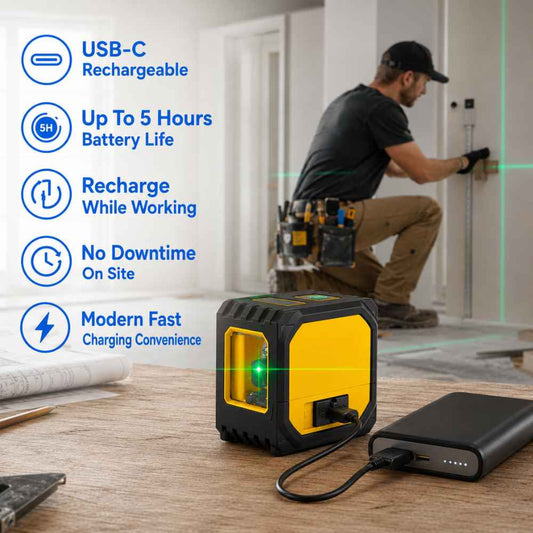

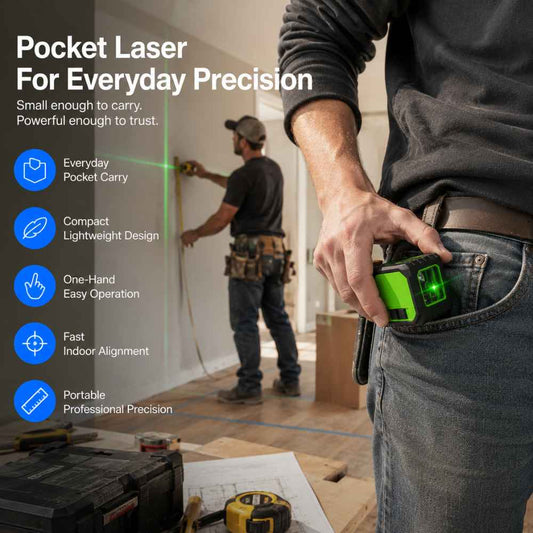

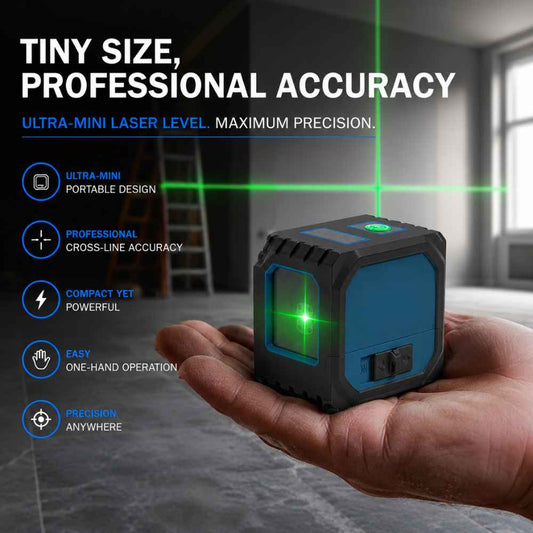

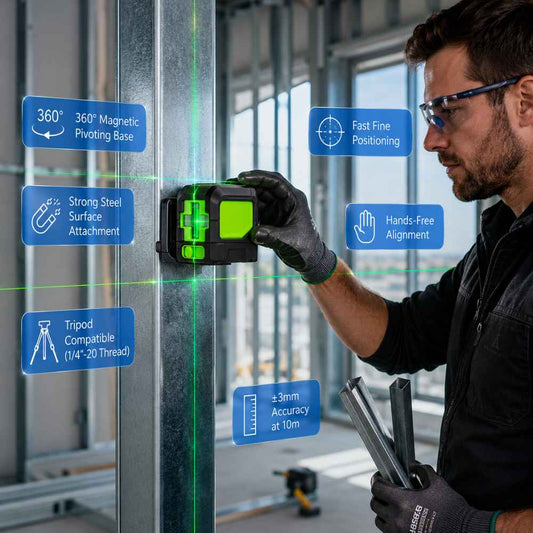




Collection: Cross line laser level
Cross line laser levels project simultaneous horizontal and vertical reference beams, making them the standard layout tool for interior tile installation, wall framing, door and window alignment, and finish carpentry across US job sites. This collection covers self-leveling models, the majority green beam, rated to ±1/8 inch accuracy at 30 feet for interior working distances up to 50 feet without a receiver. If your work involves exterior grading or open-slab layout beyond 60 feet, a rotary laser is the right format for that scope.
What to Look for in a Crossline Laser Level
Three buying criteria define whether a crossline laser level holds up on a real job site: self-leveling compensation range, working distance, and IP rating. The self-leveling range determines how much tilt the unit corrects before it locks out; consumer models compensate within ±4 degrees, compact pro units within ±3 degrees. Green beam models maintain a readable line at 30 to 50 feet indoors without a receiver; red beam loses visibility past 30 feet in the same conditions. For dusty or damp interiors, IP54 is the minimum rating worth specifying.

Cross Line Self Leveling Laser Level, What the Field Teaches You:
Over 22 years of residential builds in Nashville and the Mid-South, the most expensive mistake I have seen with a cross line self leveling laser level is trusting a wide-tolerance unit on a long tile run. A $55 difference between a ±4-degree and a ±3-degree model cost one tile setter four hours of relay work after a 3/16-inch drift at 28 feet on a 180-square-foot bathroom floor. The leveling lock range on the spec sheet is a purchase decision. The cross line laser level setup guide for interior layouts covers the full alignment process for tile and framing work.
If you are a tile setter or flooring contractor, look for a self-leveling green beam unit rated IP54 with ±1/8-inch accuracy at 33 feet. If you are an interior finish contractor or electrician needing a compact two-line reference for wall runs up to 40 feet, a mid-range crossline covers that scope. If you are a DIY renovator tackling a bathroom or kitchen backsplash, an entry-level cross line laser level under $60 delivers the accuracy the job requires. Contractor-grade options are at the top of the grid; DIY options are below.
Every model in this collection was checked at a measured 30-foot interior distance for beam lock stability, self-leveling response time, and horizontal accuracy against a calibrated reference line. For buyers who want to go deeper on setup requirements before purchasing, the how to read a cross line laser level with tripod for tile and frame work covers the process in full. This collection was last reviewed against current OSHA laser safety classifications and ANSI Z136.1 standards: June 2026.
Common Questions about Cross line laser level:
Does a cross line laser level need to be set up on a level surface to work? +
No, a self-leveling cross line laser level automatically compensates for surface tilt within its rated range, typically ±3 to ±4 degrees, and projects accurate lines without manual adjustment. If the surface tilt exceeds that compensation window, the unit locks out and stops projecting, which is the signal to reposition before continuing.
Is a green beam crossline laser level worth the price premium over red beam? +
For most interior job sites, yes, green beam models remain clearly visible at 30 to 50 feet under ambient light where red beam lines become difficult to read past 30 feet. The price difference between a comparable green and red beam cross line laser level typically runs $20 to $40, which is a reasonable trade-off for full-day interior work.
What is the usable working range of a cross line laser level without a receiver? +
Under standard interior ambient light, most cross line laser levels project a readable line up to 30 to 50 feet without a laser receiver, depending on beam color and room brightness. Beyond 50 feet indoors or in any outdoor condition, a pulse-mode compatible model paired with a receiver is required for accurate readings.
Licensed General Contractor & Independent Tool Reviewer
rayxact.com specialist contributor